Buy c-a-n.eu ?
We are moving the project
c-a-n.eu .
Are you interested in purchasing the domain
c-a-n.eu ?
domain@kv-gmbh.de · 0541-91531010
Buy c-a-n.eu ?
What are French endings?
French endings refer to the suffixes or letters that are added to the end of words to indicate their grammatical function, such as tense, gender, number, or person. These endings are an essential part of French grammar and are used to conjugate verbs, form adjectives, and indicate plural or singular nouns. Understanding and using French endings correctly is crucial for speaking and writing in French with accuracy and fluency. **
What are case endings?
Case endings are suffixes or inflections that are added to the end of a word to indicate its grammatical function in a sentence. In many languages, including Latin, Russian, and Finnish, nouns, pronouns, and adjectives change their form by adding different case endings to show their role in the sentence, such as subject, object, or possession. For example, in Latin, the word "puella" means "girl" in the nominative case, but it becomes "puellam" in the accusative case to indicate that the girl is the direct object of the sentence. Case endings are an important feature of inflected languages and play a crucial role in understanding the relationships between words in a sentence. **

Similar search terms for Endings
Top-Angebote
Products related to Endings:
-
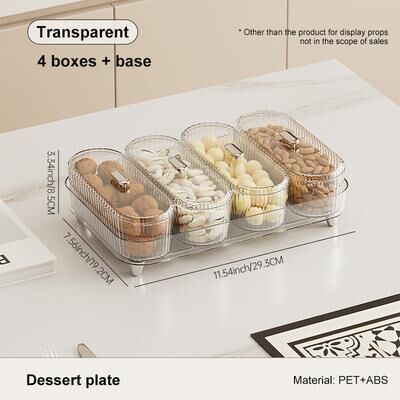
Rare Purchases Simple Style Nut And Dry Fruit Container With Lid, A Piece Of Home Living Fruit Bowl For Living Room transparentTransform your living space with A Piece of Home Living Fruit Bowl, the perfect blend of style and practicality. This simple style nut and dry fruit container with a lid adds a touch of elegance to any room while keeping your snacks organized and...56,97 $*Shipping: 0,00 $Secure redirect to the provider
-
What are personal endings?
Personal endings are suffixes added to the end of verbs to indicate the subject of the action in a sentence. In English, these are often separate words like "I," "you," "he/she/it," "we," and "they." In other languages, such as Spanish or French, these personal endings are incorporated directly into the verb itself, indicating who is performing the action. Personal endings help clarify the subject of the sentence and are an important part of verb conjugation in many languages. **
-
How should the endings be?
The endings should be satisfying and provide closure to the story. They should tie up any loose ends and answer any lingering questions that the audience may have. Endings can be open-ended to leave room for interpretation or they can be conclusive, depending on the tone and theme of the story. Ultimately, the endings should leave a lasting impact on the audience and resonate with them long after they have finished the story. **
-
Which movies have unexpected endings?
Some movies with unexpected endings include "The Sixth Sense," where the protagonist realizes he has been dead the whole time, "Fight Club," where the main character's alter ego is revealed, and "The Usual Suspects," where the true identity of the mysterious criminal mastermind is unveiled. These movies are known for their shocking plot twists that leave audiences surprised and questioning everything they thought they knew about the story. **
-
Is there a mnemonic for these endings?
Yes, there is a mnemonic to remember the endings of the first, second, and third person singular in Spanish present tense conjugations. The mnemonic is "OAS" which stands for "O" for first person singular (Yo), "A" for second person singular (Tú), and "S" for third person singular (Él/Ella/Usted). This can help you remember the endings -o, -as, and -es respectively for these pronouns. **
What is the correct grammar for enumerations and endings with n and/or m?
In Korean, when enumerating items or listing things, the correct grammar is to use 'n' before the last item and 'm' before the second-to-last item. For example, if you are listing three items, you would say "item1, item2m, and item3n." This pattern helps to clearly indicate the order of the items being listed. **
Can Joker have two different endings?
Yes, Joker can have two different endings depending on the interpretation of the final scene. Some viewers believe that the ending suggests that the events of the film were all in Joker's head, while others interpret it as a real sequence of events. This ambiguity allows for multiple interpretations and gives the film a sense of mystery and complexity. **
Top-Angebote
Products related to Endings:
-
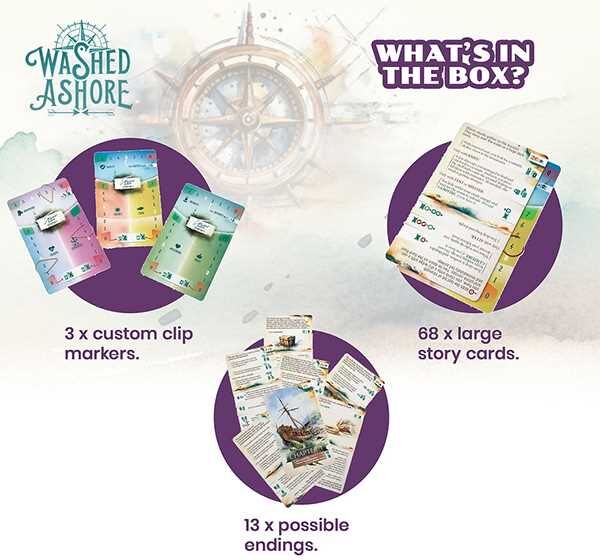
Washed Ashore Choose Your Path Card Game by Alley Cat Games, Ages 8+, Story-Driven Adventure with 13 Different EndingsWashed Ashore is a compact story-driven card game from Alley Cat Games. Players explore a deserted island by making decisions, adjusting their character and managing the developing card deck. Cards can be flipped to reveal immediate consequences or added to the back of the deck to shape what happens later. Each choice changes the direction of the adventure, creating a branching experience that rewards repeat play. With 13 different endings to discover, every journey across the island can unfold differently. This game is perfect for players who enjoy narrative adventures, exploration, and decision-making. How to play: choose your path through the island adventure, adjust your character as the story develops, flip cards for immediate effects or place them at the back of the deck for later consequences, and explore the different outcomes to seek all 13 endings.11,43 £*Shipping: 3,95 £Secure redirect to the provider
-
Tonies Tonieplay: Mystery Mavericks for Ages 7+, Interactive Storytelling Adventure with 12 Twists and 4 Alternate Endings, Compatible with Toniebox 2Get ready for a thrilling adventure with Tonies Tonieplay: Mystery Mavericks. This interactive story invites young explorers to crack a city-wide mystery. Zoe and her friend Sam race through the Big City to rescue their neighbor's missing puppy, Poochie. Every choice you make shapes the story, turning playtime into a collaborative, high-energy mission. With 12 twists and turns and 4 alternate endings, Mystery Mavericks offers hours of replayable, imaginative play. The Tonieplay technology, exclusive to Toniebox 2, unlocks new ways to play, providing fresh adventures each time you dive in. Simply pop the Tonieplay Disc on top of the Toniebox 2, squeeze an ear, and add the Tonieplay Controller to the middle of the light ring. Press the button, and start playing. This interactive storytelling experience encourages problem-solving and critical thinking.11,89 £*Shipping: 3,95 £Secure redirect to the provider
-
Rare Purchases Simple Style Nut And Dry Fruit Container With Lid, A Piece Of Home Living Fruit Bowl For Living Room transparentTransform your living space with A Piece of Home Living Fruit Bowl, the perfect blend of style and practicality. This simple style nut and dry fruit container with a lid adds a touch of elegance to any room while keeping your snacks organized and...56,97 $*Shipping: 0,00 $Secure redirect to the provider
-
What are French endings?
French endings refer to the suffixes or letters that are added to the end of words to indicate their grammatical function, such as tense, gender, number, or person. These endings are an essential part of French grammar and are used to conjugate verbs, form adjectives, and indicate plural or singular nouns. Understanding and using French endings correctly is crucial for speaking and writing in French with accuracy and fluency. **
-
What are case endings?
Case endings are suffixes or inflections that are added to the end of a word to indicate its grammatical function in a sentence. In many languages, including Latin, Russian, and Finnish, nouns, pronouns, and adjectives change their form by adding different case endings to show their role in the sentence, such as subject, object, or possession. For example, in Latin, the word "puella" means "girl" in the nominative case, but it becomes "puellam" in the accusative case to indicate that the girl is the direct object of the sentence. Case endings are an important feature of inflected languages and play a crucial role in understanding the relationships between words in a sentence. **
-
What are personal endings?
Personal endings are suffixes added to the end of verbs to indicate the subject of the action in a sentence. In English, these are often separate words like "I," "you," "he/she/it," "we," and "they." In other languages, such as Spanish or French, these personal endings are incorporated directly into the verb itself, indicating who is performing the action. Personal endings help clarify the subject of the sentence and are an important part of verb conjugation in many languages. **
-
How should the endings be?
The endings should be satisfying and provide closure to the story. They should tie up any loose ends and answer any lingering questions that the audience may have. Endings can be open-ended to leave room for interpretation or they can be conclusive, depending on the tone and theme of the story. Ultimately, the endings should leave a lasting impact on the audience and resonate with them long after they have finished the story. **
Similar search terms for Endings
-
Which movies have unexpected endings?
Some movies with unexpected endings include "The Sixth Sense," where the protagonist realizes he has been dead the whole time, "Fight Club," where the main character's alter ego is revealed, and "The Usual Suspects," where the true identity of the mysterious criminal mastermind is unveiled. These movies are known for their shocking plot twists that leave audiences surprised and questioning everything they thought they knew about the story. **
-
Is there a mnemonic for these endings?
Yes, there is a mnemonic to remember the endings of the first, second, and third person singular in Spanish present tense conjugations. The mnemonic is "OAS" which stands for "O" for first person singular (Yo), "A" for second person singular (Tú), and "S" for third person singular (Él/Ella/Usted). This can help you remember the endings -o, -as, and -es respectively for these pronouns. **
-
What is the correct grammar for enumerations and endings with n and/or m?
In Korean, when enumerating items or listing things, the correct grammar is to use 'n' before the last item and 'm' before the second-to-last item. For example, if you are listing three items, you would say "item1, item2m, and item3n." This pattern helps to clearly indicate the order of the items being listed. **
-
Can Joker have two different endings?
Yes, Joker can have two different endings depending on the interpretation of the final scene. Some viewers believe that the ending suggests that the events of the film were all in Joker's head, while others interpret it as a real sequence of events. This ambiguity allows for multiple interpretations and gives the film a sense of mystery and complexity. **
* All prices are inclusive of VAT and, if applicable, plus shipping costs. The offer information is based on the details provided by the respective shop and is updated through automated processes. Real-time updates do not occur, so deviations can occur in individual cases. ** Note: Parts of this content were created by AI.